Wednesday, May 04, 2011

Thoughts on the world: 9/20/2001

I wrote this nine days after 9/11. Between the death of Osama bin Laden and the mood I've been in the past couple of weeks, re-posting it now seems appropriate.

“New” and “changed” are words getting a lot of use these days, as in “we’re living in a new world,” “the U.S. is facing a new kind of enemy,” and “life will forever be changed.” Tonight, though, I’m reminded that, in so many ways, life—and our world—is neither new nor changed.

I read an article this evening about a Neanderthal jawbone that had been recently discovered in France. The jawbone was missing almost all of its teeth and showed considerable bone damage. Because of the lack of teeth, the scientists who found it believe that this individual would have been almost totally unable to chew food and would have had great difficulty surviving independently. Further analysis showed that the jawbone’s owner had lived for at least six months while in this condition, and they concluded that the bone provides the earliest evidence of the human capacity for caring for others—that someone, or some group, was providing this injured or diseased individual with soft food. Perhaps fruit, perhaps food that been chopped or cooked, but likely more food than the individual could have gathered or prepared on his or her own.

Whether or not their theory about this nearly 200,000 year old jawbone is correct, somewhere along the way humans did, in fact, start caring for each other. Perhaps we are touched so much by the efforts of others in New York City, and the willingness of people around the world to give to the relief effort, because caring for one another has such ancient roots. We’ve grown accustomed to rushing through our busy lives and being disappointed by the perceived slights of those around us. And yet when we need each other the most, we’re there; we come through for each other. This past week, whether we looked to our families that we were born with, or the families that we’ve made, we found a depth of love and caring that too often we had forgotten was there. And when we watched those at the epicenter of September 11’s attack, we’re overwhelmed by the selflessness and heroism of those sifting through the rubble in search of survivors—men and women unwilling to abandon those who might still be alive, unwilling to leave behind the bodies of those already dead.

This week is not the first time this summer that I’ve thought about our connection with the past. In July I drove up the coast with a man named Eduardo. We ended up following the Russian River inland, and, stopping in Monte Rio, I was struck by the fact that with all of the technology that we’ve developed and the amusements we’ve built, people still go and simply sit in the water. Maybe the swimmers and bathers were trying to escape from the traffic and computers and phones of daily life. Or maybe when you really get down to it there’s nothing better than just soaking up the sun while staying cool in a river’s slow current. But either way, here they were: young and old; men and women; straight and gay. People enjoying themselves in the most basic way that you could imagine—sitting in the water.

How can we even begin to imagine how many people have done this through the centuries, the millennia? In a way it makes me laugh at the elaborate efforts that we go through to entertain ourselves. But it also comforts me, because it is a tie to our past, to our origins.

Continuity is a great source of security. When I first came out of the closet and began going to gay bars back in 1987, there were several individuals that quickly became fixtures in my world. The first few times I ventured out, I went alone, and it was sometimes scary to walk into that new environment. Somehow it was comforting seeing familiar faces, even when they belonged to people that I never met. There was a beautiful young man named Ronno who entered a wet jockey shorts contest on a Thursday night at the End Up. For two or three years afterward I saw him around town; those being the early years of the AIDS epidemic, seeing the same faces through the months was particularly reassuring. I remember thinking to myself, “As long as Ronno is around, things are okay. Life will be all right.”

As the years passed, I stopped seeing him around San Francisco. Life, somehow, continued. By then I had established a large circle of gay friends, and that familiar but unacquainted face in the crowd was no longer needed for my comfort. Even today, though, I catch myself making eye contact across a dance floor, or on the street, with someone whom I have never met. Sometimes we smile with some strange, shared recognition that we inhabit the same world; it isn’t necessary to connect beyond that.

Connecting without connecting…: another aspect of living in a herd. We’ve lived in groups for as long as we’ve been around as a species; no doubt it is the natural condition for us humans. I suspect that nothing really “new” has happened to us for quite a long time. So what is it for us to be living in a “new” or “changed” world?

When I look around me—and inside myself—the only thing I find that has really changed is… me. This week I feel a little older. I feel a little more for those around me, whether they are next door or across the world. And I feel much more of the desire to give something back to the world. That feeling extends beyond sending money to aid the survivors of those who have fallen; somehow that’s an inadequate response to the magnitude of this. I want to be a better person, mostly in small ways. I’ve found myself waving at firemen and policemen. I’m friendlier with the people who share the routine of my life, whether they are co-workers or salespeople or men and women on the street. My grand plans for my sabbatical have been tempered; maybe I can spend some of that time giving rather than just enjoying. Maybe the opportunity it provides is a chance to share and to learn rather than to just be free from work.

Strangely enough, tonight I found myself feeling happier. It’s been a long road this past year as I’ve learned to be single again; learned to live on my own and for myself, and I know I’m happier for having been successful at that. But I’m also happier this week because I feel more alive. I feel more connected with my friends and family and the others around me. I sense the timelessness of human existence that Walt Whitman spoke of when he asked, “What is it then between us? / What is the count of the scores or hundreds of years between us?” I am reminded of the beauty of people simply living their lives; how the same things—good food, falling in love, the rhythm of music—continue to thrill us. I’m trying to be better and to figure out what I should learn from September 11.

And I know that if I saw Ronno on the street tomorrow, I would stop him and say, “hello.”

Labels: , , , ,

Friday, April 22, 2011

TGIF

It was an up and down week, but all in all, I have to say it wasn't too shabby. I feel a little shift, and for the first time in a long time, I'm present to the idea that all is well...

I watched one of my favorite movies last night--Living Out Loud--and that didn't hurt. I realized yet another way that I identify with Holly Hunter's character, Judith. (This video has nothing to do with it :-)

(Video link)

Labels: , ,

Tuesday, March 29, 2011

I am where I am

As I finished up work for the day, a thought occurred to me. Earlier I had configured a system for a test, and when it worked I got that sense of satisfaction that I only get from a computer. It's binary in nature: it works, or it doesn't.

And when it did, I caught myself feeling... happiness.

So as another day at the office ends, I feel content. I may not be living my dream, and what I'm doing may not be so lofty as to change the world, but it makes a difference to someone.

And that is satisfying in its own quiet way.

Labels:

Friday, March 26, 2010

Humility

It's late and it's been a long day, but I just feel the need to briefly write a few lines. I spent most of it at the office working in the familiar corporate environment. But this evening I had a four hour shift, ending at midnight, at a detox unit (aka the drunk tank).

Today I was exposed to the folks struggling on the street, to the people who were bringing them in and taking care of them (who probably never really imagined it'd be like this when they decided to go into public service), and to the men and women fortunate enough to work in a clean, well-tended environment by day. No one knows what anyone else's life is really like, and walking in everyone's shoes is different. But today I got a hefty dose of humility with respect to the many walks of life that people take and gained a stronger sense of respect for the difficult jobs that so many people step into. It's a rough world out there.

Labels:

Monday, March 22, 2010

A life I've never lived

My life is different now. And it's different in a way that allows me to see how what seemed different before was largely more of the same.

I'm not saying my life is better now. Nor that it's worse. But rather that the overall flavor has changed.

For about twenty years--from my college graduation through the end of 2008--my life was largely variations on a theme. There were wonderful times and some lousy times and a bunch of plain ol' run-of-the-mill times. But my life was characterized by a certain set of assumptions about what I wanted and who I was.

Last year was a transition year. Last year was a fire year. Last year was just about as bad a time as I've ever had.

This year seemed to be starting out on the same footing. But when I felt myself at my lowest, I listened to a friend and took a drive to the coast. Standing on the beach, I opened myself up to the universe and asked for a sign. And within a couple of hours, a conversation with a stranger made all the difference. She simply said a few words that turned on the lights in a darkened room, and in that moment I saw where I was going again.

I don't know exactly what next year is going to look like, but I know it will be different than this year. I don't know what 2012 will be like, but I know it will be a change from 2011. For much of the last 20 years, I wouldn't have said that. Despite the apparent drama of those times, I pretty much knew what I'd be doing: striving for love, working a high tech job. For much of those two decades, in fact, the changes that seemed so monumental from season to season were, in retrospect, pretty minor. Fabulous and wonderful and heartbreaking... but not in ways that called on me to push myself much or grow in any significant ways.

I'm finally dangling my feet into a new pond... learning new skills for work in a new industry. Starting at the bottom again. Continuing to learn. Being unable to coast anymore. Looking at working two jobs and going to school at the same time, struggling in ways that I never had to the first time around. Living with new priorities.

Maybe this feeling right now is a delusion. Maybe in 20 years I'll look back and think that these times were no different than any of the others. And if that's the case, it'll mean that I've got some other lesson to savor.

But everything is telling me right now that my life is different. And I'm going to live it that way.

Labels:

Saturday, June 27, 2009

The beginning of summer, and pride

It's summer. It's summer because it's hot. It's summer because it's hot, and I heard a song I liked on the radio. It's summer because it's hot, and I heard a song I liked on the radio, and that's how I knew it was summer as a kid: I opened the windows and enjoyed the heat and turned the radio up loud.

I listened to Casey Kasem's Countdown. I listened to my 45s.

And life was good.

One of the few things I love about Vegas is that it's hot in the summer, and that activates my inner Stonehenge. In the summer I was free from school, and that made the milestones that marked summer all the more important.

Memorial Day Weekend.

The heat.

Pool season.

Wheat harvest.

Freedom. To do nothing. To open the windows and blast my music. To run around in as few clothes as possible (my friend Brian would wear his swim trunks for days in a row, even sleeping in them).

I loved my first decade in San Francisco, but one thing that was always difficult was the disconnect between my internal sense of the seasons turning and the external reality of a cold, foggy June. An August/September summer just isn't the same.

I want it hot, and reliably so, and I want to hear pop hits. I want to be free.

JUNE IS ALSO PRIDE MONTH, and this year is the 40th anniversary of Stonewall. I've been thinking of Pride's gone by...

1988, Stonewall 19. My first Pride. I went to San Jose Pride earlier in the month. A week or two later, I arrived in SF early to march with the Stanford contingent. I was outdoors from sunrise to sunset, and I got the worst sunburn I've ever had. I remember making eye contact with a boy on a float as it passed by. I made out at The Stud with my friend Matt. It was all magnificent.

1989. I was dating my first James. We had broken up for a week (not the first time, not the last). I went to SF with my friend Andrew, and we went to one of the first nights at Pleasuredome, the nightclub that was to become my all-time favorite. I also went to Santa Cruz Pride (once was enough).

1990. SF. I think this was the first year that Oracle Corp. had a group marching in the parade.

1991. I had just moved to SF; I think we had a party at Club Fabu. The first Pink Saturday?

1992. In SF, but my memories are vague.

1993. Uh, oh, vague again. My last SF Pride before meeting Tommy and "the new era." :-)

1994. Tommy and I celebrated SF Pride and flew to NYC the next day with Bette and Andrew for Stonewall 25. Now that was a week! We saw none of the Gay Games... but we went to a lot of great parties. Everywhere we went the streets were filled with gay men and lesbians: leathermen in chaps at the theater, boys on the subway, girls in the streets. Everywhere. Tommy and I stood on top the WTC and climbed to the crown of the Statue of Liberty. We danced in a gothic cathedral and on an aircraft carrier. Nights to remember...

1995. My friends and I danced all night, changed clothes, and rode the Club Universe float--the last float in the parade--in what was definitely my wackiest SF Pride ever. And this, the most memorable of all years, also included our first San Diego Pride. Our first zoo party: one of the best evenings with my Joy Luck friends ever! Where is the butterfly egg?

1996. SF, but a strange year. Not with Tommy, but not without him either. I think I hit Long Beach Pride as well.

1997. Jamie and I missed SF, instead spending a glorious week in Puerto Vallarta. But we went to San Diego Pride with friends from SF and Madrid.

1998. SF and San Diego with Jamie. Very good times.

1999. SF and San Diego with Jamie. More good times.

2000. San Jose Pride with a new group of friends. Then home to Kansas for a family reunion, missing most of SF Pride. Returned for Pleasuredome Sunday night; much awkwardness seeing Jamie. The beginning of a long, rough period...

2001. SF Pride. Way too excessive, though memorable. But long-lasting consequences.

2002. My first year in Portland. Marched in the parade with the Panorama float, but had a strangely lonely afternoon. Too many friends working that day...

2003. I missed Portland pride, home with a cold. But had a really fun Vancouver Pride with my friend Alex. (Or was that 2004?)

2004. Another vague year... not sure if I went to Portland Pride or not...

2005. Missed Portland Pride and what I think was the first warehouse party. Was in Los Angeles for Andrew's 40th.

2006. Back in SF, and a fun weekend celebrating pride. And back to Portland for the craziest Pride there ever! If only I hadn't lost my rental car... twice!

2007. Believe it or not, my first LA Pride at the end of the AIDS/LifeCycle. And then SF Pride... my absolute rock bottom during another difficult time. So over SF by this point. And then I met Victor at San Diego Pride.

2008. San Diego Pride with Victor. Some good moments, some very bad ones.

2009. Stonewall 40. Portland Pride... what a wonderful trip! So many good friends to see again.
Everything was just right and in balance. And a last minute trip to SF today, back to where it all started. :-)

UPDATE And to top off 2009, Tommy and I headed to San Diego for Pride. A very fun weekend... the highlight was our janitor grift... we pretended to be janitors to get into a sold-out party Saturday night!

Labels: , , , ,

Friday, March 23, 2007

They come when they come

Insights, that is: they show up at the strangest of moments.

I had dinner tonight with a friend. We had margaritas and Mexican food at La Rondalla, the scene of oh-so-many drunken and crazy nights in the latter half of the 90s. Given the food fights and broken glasses, I'm surprised that any of us are still allowed on the premises. Yet we are.

We had dinner. We walked down the street to one of my faves (Garcon) and had a nightcap: sauvignan blanc for Michael; sidecars for me. And we talked. We talked about relationships. We talked about work. We talked about drinking.

As we finished our conversation on the sidewalk, I talked a bit about Buddhism and its five precepts, fifth among them being abstaining from intoxicants. I told Michael I could see how most of the suffering in my life was related to not following those the five precepts. I said I had considered giving up drinking. I said I could see the benefits of doing so; I said that it was hard to imagine doing it.

I drove to the Castro, San Francisco's gay mecca, and stopped at my favorite bar for a final beer. And when it was done, I did something I'm becoming known for: ending an evening of cocktails with a trip to the supermarket.

It was then that I had my insight. I was carrying my groceries a couple of blocks to my car. I'm 41 years old. I was wearing jeans, tennis shoes, a tight t-shirt, and a hoodie. I passed the boys and girls coming in and out of the bars. I walked by a store with posters advertising the latest sexy gay videos, hot stars smiling over their bare chests.

And it came to me: all of this--the drinking, the clothes, the neighborhood, the sexuality, the energy--was hard to give up for one particular reason. I grew up in a tiny town in Kansas. I was awkward, unattractive, and uncoordinated in junior high. I had no dreams of fame or money, only a hope that I'd someday belong.

Then I came out and eventually discovered a world of flashing lights and beautiful bodies. I worked in high tech and prospered during the dot com era. I got to experience things I had never imagined as that shy, introverted teen. I flew from coast to coast to find the best party. I ignored everything in the pursuit of love. I cavorted with "drug stars and porn dealers." I earned and lost more money in one year than I had ever expected to see in a lifetime.

Whether this was what I wanted or not, it was the only foothold I had ever known in that wider world of What People Want. It was the way I had found to belong. It was acceptance, and more than that, success. But only in the sense of playing somebody else's game very well.

Seeing all of this, I remembered the things that I enjoyed as a kid: reading; quiet, often philosphical, conversation; running.

And it occurred to me that perhaps leaving behind all of the flashing lights and cocktails and beautiful bodies might not be a departure but an arrival, a return to where I started.

I don't know the destination. I don't know the schedule. But little by little, the path becomes clear.

Labels: , ,

Sunday, November 26, 2006

Circle of life

It's been quite a while since I've posted... October and November have been interesting months.

Interesting. A word I use a lot. And one that doesn't reveal much.

I went to Los Angeles with Anthony the last weekend of September. And that weekend my grandmother broke her shoulder and was taken to the hospital. While there she broke her hip, and very quickly her prognosis worsened. My dad and his siblings made the difficult decision to move her to a hospice.

I flew home that week and spent several days with her. Based on my conversations with my parents, I wasn't sure if Granny Jean would recognize me, but as soon as I walked through the door her eyes lit up, and I was so happy that I had made the trip back to Kansas. She said very little in the four days I was there, but I know that she knew she was surrounded by people who loved her. My Aunt LuJean and I spent one night together in Granny's room, and I woke several times and found myself listening closely, relaxing only when I was sure I heard two different people breathing in their sleep. And while Granny ate little, I had the opportunity to feed her and give her water to drink: just a spoon tip full of ice cream or a straw full of water. I found myself feeling terribly protective of her. The cheap tissues in the room weren't good enough; I had to buy lotion-enriched Kleenex for her. Tap water wouldn't do; she needed Vitamin Water. And the room was too quiet, so I bought a CD player and CDs so that she could hear the music that she loved.

At the end of the week I had a difficult decision to make: to stay in Kansas or return to California for my fourth life coaching class. I checked the schedule of upcoming classes, hoping I could reschedule, but the earliest I could get into the fourth and fifth classes, if I didn't stay in the classes I was registered in, was January and April, delaying the completion of my training by five months. And so I returned home.

The following Monday, October 9, I saw a movie with Anthony, and when we left the theater there was a voicemail waiting for me. It was my father, and I think it was the first time I had ever heard him crying. By the time I called back Granny had died.


RACHEL JEAN GIGGY WAS BORN March 4, 1915, in Burrton, Kansas. She married my grandfather Lewis Short in 1936; they had five children. When my father was still a child the family lived in a box car. Years later Lewis would be the mayor of Burrton; he died in 1973.

Six years later Granny married Chick Shaft, and they enjoyed four wonderful years together before he died in 1983. Until her death Granny continued to live in the house she had shared with Chick. We still refer to the house she lived in with Grandpa Lewis as "the blue house" despite the fact that it was white when they lived there.

Wherever Granny lived, her house was known as a place where everyone was welcome. Family and friends came and went, sat where they wanted, and joined the conversation or remained silent as they chose. When my cousins and I were young, we explored the house: we had certain bedrooms that were ours to play in, along with the a large enclosed porch and the basement. And the house was situated on a huge lot with a garage and a barn, not to mention a collection of farm equipment in various states of disrepair.

Until I was six I lived in a mobile home in Granny's yard. My Dad later built a house for us across town, but I always felt incredibly lucky to have gotten to live right next to Granny, free to visit whenever I wanted. The year my mother finished high school, Granny watched me each day. This was something I hadn't ever really known; learning about it made getting to take care of Granny at the hospice all the more special to me.

When I was older and my parents had become hippies, their friends were just as welcome in Granny's home. You were as likely to find long-haired men in jeans as white-haired old ladies in polyester around Granny's table.

As my cousins and I grew up, we began to call ourselves "Jean's Kids," and we sang the name to the tune of the Batman theme song.

I RETURNED TO KANSAS for the second time in a week for the funeral. The night before the funeral, we gathered at the funeral home for a viewing. I began to get a sense of who my family was; in a way, I had never really paid attention before. They had always just been my family, and like the water I swam in, invisible.

I noticed how we remained upbeat and boisterous while friends came to pay their last respects. But when the parlor cleared and only family was left, we began to break down and cry. We can be stoic, even hard, people.

We are also rambunctious, and it occurred to me that I didn't know of another family like us. When we gather back in Burron, a small town of 800, we take over the local American Legion which serves as the town's only bar. Sometimes they open just for us. We've always been ones to play hard.

That night, my parents, Aunt LuJean, and cousins Joey and Kim returned to Granny's house where we sat around her kitchen table and shared stories of Granny and growing up with her. I sketched the floor plan of the blue house; we used it as a visual aid for our stories. And in the process we downed a bottle of whisky, one shot at a time. (I'll leave out the wine and the beer, not to mention the resulting hangovers.)

I was a casket bearer for the first time. I was quiet during the service; getting up to speak would have been far too difficult. I cried when my Uncle Jerry and LuJean shared remembrances of Granny. LuJean read the lyrics to an old bluegrass song that Granny liked to recite.

The rest of the weekend was good for the family. The 2004 election had resulted in a lot of intrafamily tension; there were occasionally some heated exchanges between the Reds and the Blues. I knew that this time together would be a healing experience for us. And it was also a milestone, a reminder that the default reason for getting together--and the default place for gathering--was gone. Granny had always been our center, assuming the role of the matriarch in a quiet, unassuming way. If there was anything that we all agreed upon, it was that we simply adored her.

BACK IN SAN FRANCISCO I found myself taking stock of my life. I looked back over the past few years and questioned some of the choices I had made. I looked ahead and felt some fear about the new career I'm creating for myself. I felt mired in the uncertainty of where I would live. I had moved into a friend's in-law unit on what I thought was a temporary basis; eight months later, I'm still there, and almost everything I own is in storage in Portland.

And I'm in love, facing the fact that Anthony is moving up to Sacramento for six to seven months, and then likely south down to Los Angeles. What will I do? How to not live the next half year of my life in a state of limbo?

In early November, I went to my final life coaching course. I found myself sitting there thinking about how absolutely mysterious life is. What a thing it is to be conscious... to be a conscious being living inside of what is essentially an animal. I thought that my whole life could simply be an inquiry into the question, what does it mean to be me? What does it mean to be human? What is it like in your world? Why am I here? What place do I want to make in my life for a partner? What am I going to do with my life?

There are no answers. This is simply what it is to be a person. These are the things we do. Fall in love. Question it. Feel pain. And joy. Make choices. Second guess them. Move on.

And ultimately, for most of us, we leave the world as we entered it: helpless. Unable to control our bowels. Unable to feed ourselves. Life moves in a circle, perfect in its way. We feel no sadness for the baby that needs our care, perhaps there is no reason to feel it for the elderly. It seems unfair, somehow, that youth and strength should give way to old age.

But that's what happens. Maybe that's a small price to pay for all the glorious living that can happen along the way.

Or maybe that's just the way it is.

(Tags: Rachel Giggy, Jean Giggy, Jean Short, Jean Shaft)

Labels: , ,

Monday, September 18, 2006

A whole new wing

What a wonderful new world I'm living in today!

And I hardly know where to begin. :-)

In August I was in CTI's Fulfillment course, the second course in their life coaching curriculum. We were paired up for a coaching exercise, and when it was my turn to be the client, I was asked to name a bold future to live into. What came into mind was being a Wisdom Course leader, and I spoke those words. Boy, have I learned the power of a simple declaration!

What inspires me about taking this on is my experience both as a participant in the course, which I completed in 2003, and as a YODA (Your Own Devoted Angel, a sort of coach) for the course this year. Being in the course completely altered the course of my life, and I'm finding that assisting in the course this year is doing the same, perhaps even more profoundly. Sitting in the course as a participant three years ago, I found myself looking out the window of the Seattle hotel ballroom we were in, noticing the traffic on the freeway slowly moving by. The thought that occurred to me was that humanity is a sleeping giant, that we are mostly going about our lives on auto-pilot, asleep to the full potential that we have as human beings. This year as a YODA, I declared that I wanted to be known as someone committed to waking that sleeping giant.

The natural action to take was to speak to a current Wisdom Course leader in training, and I did so the following week. And a week after that conversation, I registered in Landmark Education's Introduction Leaders Program. This seven month intensive program is designed to train the course participants in how to introduce people to Landmark's programs, and it's the first step for people interested in leading seminars and other courses for the company. But it's about far more than teaching us how to pass on information; it's really about developing our capacities to communicate effectively, to listen to others, to get into their world, and to assist them in creating new possibilities for their lives that didn't previously exist. An introduction to the Landmark Forum isn't just about finding out what the course is about. Rather, it's designed to give participants value they can leave with and an experience of what participating in Landmark's courses is like.

So, just two week's after speaking the words, "I want to be a Wisdom Course Leader," I was sitting in a chair as the first of the Introduction Leader Program's four weekends began. In the room with me were 200 other participants from Northern California, Oregon, Washington, and British Columbia. As we each proceeded to the stage to briefly introduce ourselves, I found myself judging people; in particular, noticing and being frustrated by the participants who introduced themselves more effectively and eloquently than I. And then I saw what a jerk I was: these people were committed to the same thing as me... these people also wanted to wake the sleeping giant. Did I think I was going to do that alone? These people were my partners!

THIS PAST WEEKEND I completed my third CTI coaching course, Balance. The class developed our ability to assist clients who felt stuck in some areas of their lives. We learned techniques for having them look at those areas from additional perspectives and to then to choose a perspective from which they could take more resonate actions. A key and sometimes confronting step in this process is realizing that one's current view of how things are isn't reality itself, isn't truth, but rather is just one among many perspectives.

The twenty-four participants in the course were amazing. Some of them had been in my previous courses; some were new to me. As a group, working in conjunction with two awesome leaders and three great assistants, we created a powerful space for really exploring what's possible for people. We were--we are--twenty-nine people who are going to change the world, one person at a time.

One of my friends in the course had a breakthrough experience on Saturday. We were doing a paired coaching exercise, and when it ended, I realized that something had fundamentally shifted for her. She got a life-altering view into her world; she got that her reality is just a perspective. And she got that she is responsible for her life. The only place I have ever seen that happen for someone is in the Landmark Forum; that three-day program is designed to provide this sort of breakthrough for the participants. At the next break, I took my friend aside and talked to her, giving her a chance to really get rooted in this new wide open world that she had discovered.

THE COURSE ENDED SUNDAY EVENING, and I headed back to San Francisco. I went to the gym, and while working out I reflected on some of my recent experiences in the Wisdom course, in the Introduction Leaders Program, and in my coaching classes. The passion and commitment that people bring to these programs is incredible, and I felt strongly that this was the life I wanted for myself: committed to being my best, to stepping into all that I can be, to saying "no" to business as usual and to playing small. I began to wonder how I'd integrate all of this with the life I already had; I began to worry that it wasn't possible.

And then what I had just learned in Balance came to mind: thinking that it would be difficult to integrate the old and the new was only a perspective, and there were other places I could stand. And I stepped over and took the view that my life was expanding, not remaining the same size, and that there was room for all.

I moved to another machine, and then something began to quake in my world. A little over a month ago, a friend of mine chose to give up drinking for 30 days. At the end of the month, he sent out a note to tell us that he was enjoying re-connecting with activities that he had not enjoyed for some time, things that had been neglected while he had been carousing with us at bars. I was most touched by his description of the simple pleasure of preparing meals for himself.

And he chose to take on another 30 days of not drinking.

There in the gym I found myself thinking about doing the same: abstaining from drinking for a month. But it wasn't occurring for me as a thought or a good idea. Rather, I had the sense of the universe pulling me toward that action, of something powerful calling on me to take this step. I was reminded of something Landmark promises: that new openings for action will powerfully call me into action. And that was my experience... that deep within me my true self was saying, "Do this."

I found myself in a monologue about when to begin. This coming weekend is my first free weekend in several weeks, and afterwards I am in class the following four weekends. This weekend is also Folsom Street Fair, my favorite weekend in San Francisco, a weekend of fun and parties. The smart thing to do would be to start my 30 days on Monday the 25th. But I could feel in my bones that there was no truth in that. What felt true to myself was starting now.

The whole experience was somewhat frightening. I was scared because I suddenly found myself staring into the unknown. I could sense that my life was changing... no, that my life was growing. And yet it wasn't my life that was growing. It was me. The metaphor that came to mind was that I was a house, and in this moment I had found and opened a door. Behind the door was a whole new wing to the house... it was as if I had found that my whole life had been lived inside only half of who I am. The last three years have been ones of amazing breakthroughs and growth, but they took place in the rooms that I already lived in, in the life that I already inhabited. What was happening now was opening a wholly new, wholly unexplored world. And I was scared.

I left the gym and tried to reach my mother. I want my mommy! I called three other special friends who I thought could understand my experience. All I got was answering machines. I think I must have had the look of a man who had just walked out of the desert, wide-eyed and a little crazy.

An hour later, I spoke to Mom and my friends Romaine and Siobhan, and all three conversations grounded me and clarified what I was experiencing. To all of you, Thank You.

Next year I am taking a Landmark course called Partnership Explorations. One of the inquiries the participants take on is, "What if the fundamental thing that determines who we are is not something in ourselves but rather a function of the relationships that we are in?" In speaking to my mother, I began to see something in that. What if the breakthroughs I had in the course I took in Costa Rica were a result of being embedded for a week in conversations with the others in the course? What if I showed up as a leader because that was what was being called forth from me by my fellow travelers? What if I can re-create who I am by expanding the circle of people that I speak to?

Wow. I'm reminded of a perspective that we tried on in CTI's Balance course: the world is a banquet of unending possibilities.

TODAY IS MONDAY, SEPTEMBER 18TH. The world is wide open today. I have a whole new wing of myself to explore...
And this day begins my 30 day break from alcohol and any substitutes that may present themselves.
Namaste!

Labels: ,

Thursday, September 07, 2006

Today is my coming out day

Or at least the anniversary of it.

It was 1987 and the summer between my junior and senior years at Stanford. I was living on campus with my girlfriend Jane; we had swapped roommates with another couple in order to make that work.

Jane and I had a wonderful summer. We had been dating for a little more than a year; I loved her. But when I was alone--late at night as she lay sleeping, or as I walked across campus--my mind wandered. And now that summer was coming to an end, Jane had headed back east to spend a few weeks with her family.

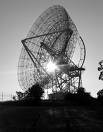
One of the things I remember most about Stanford was running. I ran around campus. I ran up in the foothills to the Stanford dish, the huge radiotelescope that was a major area landmark. I ran at the track. I ran alone and with friends. For a brief time I joined the Stanford Running Club. I ran during the daytime. I ran at night. I was young and lean and--while running--free.

This night, a Monday, I was running around campus. I think I must have been nearing the end of my run as I was on Serra Street, close to the apartment building where we lived. And I think my mind must have been spinning, struggling to figure out who I was. Or maybe it wasn't. The only thing I remember clearly is that I stopped running, not far from the Stanford Federal Credit Union, and said, outloud, "I'm gay."

I don't remember what I thought next. I don't remember what happened that night or the next day. But that following Thursday I made my way to the End Up in San Francisco. I worked at the library, and I'd occasionally sneak a copy of the B.A.R., a gay newspaper, into the reading lounge area, slip it inside another newspaper, and read it. The End Up's weekly wet jockey shorts contest had always caught my eye, and I had decided to check it out.

Easier said than done. It was easy to find the End Up. It wasn't so easy to go in. I sat in my car, just across the street from the front entrance, unable to get up the nerve to go in. Eventually a drag queen knocked on my window; when I rolled it down slightly, she asked if she could come in and have sex with me. Roll 'em up! I was out of there so fast and back on the road home.

But a week later I was back. I found the courage to get out of the car. I paid and went in. And there, on the dance floor in front of me, was the most beautiful sight I had ever seen: men dancing together.

I was home. :-)

Jane returned a week or so later. I couldn't yet explain the transformation I had experienced; instead I could only lamely say that "I needed to find myself." To make the situation more difficult, Jane's wait list request to move into my senior dorm had been approved. She'd be in the room directly below mine.

Once the fall quarter began, I discovered a gay and lesbian coming out group at The Bridge on campus. I began to form my first gay male friendships, and I had begun coming out to my close straight friends. But Jane was still in the dark.

Then the end of October approached, and I again found myself at the End Up on a Thursday, this time two days before Halloween. That night I met Tony who became my first boyfriend. He invited me back to the city for Halloween in the Castro. He was a tiger, complete with face paint. I, a bit more naive, was dressed as Mr. Bubble. We had dinner at the Patio Cafe on Castro Street before joining his straight friends at 1015 Folsom for dancing. The only thing I really remember from being there was hearing Book of Love's "Boy" as we sat at a table:
I want to be where the boys are
But I'm not allowed
I wait outside of the boy's bar
I wait for them to all come out

Eventually we made our way back to the Castro for more people-watching. We made out in the car for an hour (or two?) before walking down Market Street to get back to the festivities. It was the first time I had ever held hands with a man in public, and I was surprised by the number of smiles that people gave us as we passed. The reason became clear when I looked at Tony--his face paint was smeared... and my face was a mirror image, lol.

An hour later, standing in front of Castro Street storefront, we made out for what seemed like forever.

I cannot pass that place today without remembering what has always been the most romantic evening of my life.

Back in the dorm the next day, I saw Jane. She remarked that I was in a good mood. I said that I was. "You met someone," she guessed.

"I did."

"What's her name?"

"His name is Tony."

"He's a guy?"

"Yes."

"You're gay?"

"Yes."

Jane rose, walked to me, and held me. And in that moment all the pain and awkwardness that we'd felt was gone.

The End Up remains a San Francisco insitution. One of the bartenders, Debbie, has been working there since the mid-80s. And this past Labor Day weekend, I spent quite a few more hours there than I'm willing to admit in public, hee hee hee.

Next year will mark the 20th anniverary of my coming out, and I think I'll be making a late night trip to the Stanford campus... for a run.

And Jane, wherever you are, thank you. That hug, your love, and your friendship has made such a difference in my life.

(After 9/11, I wrote a short essay that also touched on my early experiences as a gay man. You can read it here.)

Labels: , ,

Monday, August 28, 2006

1,000 miracles a day

Busy busy busy! What a couple of weeks I've had!

This past weekend I was in my second life coaching course, CTI's Fulfillment. What an awesome course and group of participants. In the Fundamentals class I took back in July, there were a number of people that were just testing the life coaching waters. This time the class was filled with people who have made a choice to pursue a coaching career, and that commitment really showed up in the coaching exercises we did together.

As an exploration of our personal values, we did a guided visualization where we imagined ourselves visiting the home of our future self 20 years down the road. We did the visualization twice. The first time I got a clear picture of a home sitting on a low hill that was lushly landscaped with tropical plants. The house had a courtyard and was filled with light. I had a sense that it was a gathering place, a place where people came together for conversation, for planning, for fun. And I got some sense of who my future self was. When I was asked what name my future self was known by other than my given name, the word Leader came to mind.

The second time we did the visualization, I was actually able to see my future self... a 60 year old version of me. It was like seeing my face morphed with that of my maternal grandfather's. And it wasn't that bad... I got that it was okay to grow old. My face was happy. I had gray hair on my chest. My nipples were still pierced. :-) Best of all, my future self had wisdom to share with me when I asked him questions: will I find a true partner? what path should I take?

When the visualization ended this second time, I found myself very sad until the woman leading the exercise told us we could return at any time. Somehow it is comforting now to know that I have that place--and that sense of my future self--to return to whenever I choose.

Overall the course was amazing. I love what life coaching is opening up for me, and I have a sense of having found my passion. What's more... I'm going to be good at it; throughout the weekend I received such wonderful acknowledgment from many people in the course. We did an exercise where we got into two lines facing each other, acknowledged the person across from us for three minutes, and then rotated, repeating this seven or eight times. How great it was to get to tell people what I admired about them... and to open myself in turn to hearing what in me people wanted to acknowledge.

And so I'm starting my coaching business. I have two sample sessions scheduled for this week with potential clients, and I'm having another session with a woman whom I may take on as my own coach for the next few months. This new adventure is coming into reality!

THE WEEKEND BEFORE MY MOTHER WAS IN TOWN for the third weekend of the Wisdom Course. She's taking the course in Denver and came out to share this particular weekend with me.

I got so much out of the weekend. I am coaching the course and on the team responsible for grading the participants' coursework: a display of the people they regularly communicate with, an autobiography, and collages. Friday we had some breakdowns: there were some surprises to which we had to adapt and some breakdowns in procedure. With roughly 200 participants and eight to ten pieces of coursework per participant, there were a lot of items to be handled. The three of us accountable for getting the coursework graded by the coaching team were told that we had "failed."

I left the course that night committed to not getting on it about that statement, but as I got into bed I was totally in my head about it and unable to sleep. I woke on Saturday expecting a long, unpleasant day: I would arrive at the host hotel at 8am and be there until 11pm.

Instead something else showed up. I chose to live inside the idea that all was well. We had a coaching meeting in the morning and got really straight with each other about what was and was not working. Out of that we came together as a team and made great progress throughout the day, in the process growing and developing ourselves.

What opened up for me was an ability to really hear the course participants that I'm coaching. In a conversation with one of them that was occurring for me as an argument, I suddenly stopped resisting and just heard what was being communicated to me. In that moment I got how committed I was to having this person in front of me get a new life out of the course. And standing in that place, I was able to speak in a way that had my participant feeling understood.

It was an intense conversation, but it opened the world for me. I was left with a feeling of love for everyone in the course.

That night we had a community and social event attended by the everyone in the course as well as their guests. Tony came as my guest, and I got to introduce Mom as my guest as well which meant so much to me: "Who you are for me, Mom, is art, generosity, and from beginning to end, love."

On the way home, I was talking to Tony outside my car when a homeless man asked me for money. My wallet was in my car, and I told him I didn't have any. I returned to my conversation with Tony for 10 to 15 seconds, and then I realized I was full of shit. I went to the car, got my wallet, and gave the man $5. He reached into his bag and pulled out a drawing and gave it to me, humbling me with his generosity and acknowledgment. And for the first time in my life, I hugged a homeless man.

For a second night, I had difficulty sleeping. But this time the culprit was excitement. I literally couldn't wait to get back to the course the next day. I couldn't wait to be back with that community of people who were committed to making a difference in the world.

The course was great on Sunday. Mom and I were going to see Love, Janis immediately afterwards, and I collected my things to go. I had to walk about 50 feet to get to the escalator, and in that space I encountered 20 or 25 people. Some wanted to thank me for what I had done during the weekend. Some were people that I wanted to acknowledge. Some had lost their coursework and were upset... and relieved when I took the time to help them find it. Some wanted to share breakthroughs they had had.

And there it was... I got why I choose to contribute to this wonderful Wisdom community. I got why I get on the phone for the conference calls and the conversations with my participants. I got why I'm going to all of the five three-day weekends and the team training days and the coursework parties. It's because when these people get together, I am so present to witnessing 1,000 miracles a day happening around me.

And thinking back to that homeless man on the street, I also got that having a life filled with miracles every day only takes a simple choice, only takes a moment, only takes that short journey which sometimes seems so desperately long: stepping outside of one's self and into the world of another.

Labels: ,

Monday, August 14, 2006

Images from the seventh grade

I was reminded today of two conversations I had in Costa Rica. One I had already shared with some friends back here in San Francisco; the other might have slipped away from me completely if my friend Lionel hadn't triggered a memory of it today. Both conversations took me back 27 years to junior high. And both gave me new insights into the events that have followed.

The first conversation I shared with John on the beach at our resort. John made a comment about certain events having the ability to shift the arc of our lives, and the image that flashed into my mind was of a certain dance in the 7th grade. Despite it being one of my first, I don't recall anticipating it with any particular anxiety. I do remember having to lie on the ground to zip up what are quite probably the tightest pair of (white) pants I've ever owned (yes, it was '78 or '79 :-).

I was pure geek at that point in my life with glasses and a mess of hair, but I had always gotten along well with girls, even having had to fight them off the summer before at science camp while swimming in the pool one day. Another boy in the showerhouse had asked me my secret... I had no idea. Of course, it was likely that it was simply that I was a young gay man in the making and--with no designs on them--totally unthreatening to those girls.

At the dance I had already asked Terri (name changed to #1 protect the innocent and #2 because I don't really remember!) to dance once, and after the requisite return to the "boys area," I was heading in her direction to ask her a second time. Then it happened: she caught sight of my approaching her, cringed, and tried to hide behind another girl.

That was all it took. I decided in that moment I was a loser when it came to love, romance, dancing... everything that that awkward night now represented. To save face I went up to Terri and blurted out something, trying to leave the impression that I'd only walked over to share some piece of information.

Eight years later I came out, and six years after that I began some serious clubbing. One space in particular, 177 Townsend, the home of Club Universe and Pleasuredome, became my weekend home. From the summer of 1993 until the building was torn down in the summer of 2002, I danced at 177 at least three weekends a month. I gradually developed from the innocent kid wearing Don't Panic t-shirts to a circuit professional. And along the way, I developed a bold confidence in that space that allowed me to approach and proposition just about anyone that I wanted.

John's comment about how an event can alter what comes after gave me this insight: those years at 177 were about more than just having fun. They also were a symbolic, though unconscious, effort to undo the pain and embarassment of that 7th grade dance. I chased all of the "yes's" to chip away at that one big "no" that had followed me after that night.

And writing this I have another insight: I'm lying. Terri never said "no" because I never asked her. I saw something on her face and decided it meant "no," and rather than risk finding out for sure, I took myself out of the game for many years.

The second conversation followed from the "no secrets" discussion that I referred to in my "Communication" post. I had been talking to my friend Dolly about this idea of living without secrets, and one of the reasons I gave was that, looking back, I could see how much pain and suffering had resulted from my keeping secrets. One example was my keeping hidden for so many years that I was gay.

I saw Brian McNaught's "Growing Up Gay and Lesbian" on public television in the mid-90s. In the program McNaught said something that had never occurred to me yet had the ring of truth for my own life. Gay and lesbian kids often grow up, he said, keeping secret the fact that they feel different, that they are finding themselves attracted to others of their own gender. Unlike other minorities, gay and lesbian kids don't normally grow up in households where their parents are members of the same minority. And even though those gay and lesbian kids usually feel loved by their families, they may carry the fear that if their parents and siblings knew their secret, then they would no longer be loved. Years later after having come out, they may still find difficulty in accepting love, having learned as an adolescent to fear that love might disappear if they let themselves be fully known.

I first became aware that I was attracted to boys when I entered the 7th grade and for the first time was eligible to participate in organized sports at school. Football practice began a few days before the school year kicked off, and while no one told me that I had to join the team, I had the sense that it was the thing that boys did and that I ought to go out.

I arrived late that first morning and had to run a lap as punishment. While a pretty decent runner, I wasn't particularly coordinated at that age and suffered through the rest of the session, then headed to the locker room with the rest of the boys. Once there I again had a moment when everything shifted. Everyone else took off their gear, undressed, and headed for the showers, but I found my eyes drifting to some of the eighth graders and their more developed--more manly--bodies.

And just as I did a few months later at that dance, I decided something in an instant that swung the course of my life. I decided that I didn't fit in, that I was different, and that I had to hide those facts. I decided that I couldn't let myself get too close to those boys, and the men that would follow, because I couldn't let them know my secret. Without undressing or showering, I bolted from the locker room and headed home.

When I came out I was at last able to begin to break down that barrier to intimacy with men, but only with those who were gay. Straight men--nearly half the world's population--remained off limits as friends. If I act to friendly, I thought, they'll misunderstand and think that I'm interested in them. In 2003 I participated in Landmark's Transforming Yesterday's Strategies course and distinguished for myself that I had made this all up, that no one had told me I didn't belong, that there was no banner saying so. But still, somehow, I was at fault. Had I been smarter or stronger or something I wouldn't have hidden in the first place.

After sharing this all with Dolly, she said something that gave me a whole new perspective: "What you did, Michael, was a perfectly appropriate thing to have done. Growing up in a small town in the Midwest in the 70s, not hiding that you were gay might have put yourself in danger."

Oh. So maybe there was nothing wrong with what I did. No one had ever said that to me before, and it had never occurred to me. Instead of lacking courage maybe I had simply chosen wisely. And in speaking to Lionel today I realized something else: what I did do, as soon as I could, was get myself to the San Francisco Bay Area where it was safe to take the next step as a gay man. And in doing so I got to come out on my terms. When I stepped off the plane in Kansas for my first visit home after telling my parents I was gay, my mother told me that I was standing taller than she had ever seen me, and she knew in that moment that everything was okay.

And knowing my secret, my family still loves me. As for Terry, I hope she's found as much happiness as I have.

But I bet I'm a better dancer. :-)

Labels: , ,

Friday, August 04, 2006

Pura vida!

"Pura vida" is a phrase commonly used in Costa Rica; it translates literally as "pure life." The words embody the free spirit and love for life of the Costa Rican people.

The phrase also describes my experience there this past week. I flew to Liberia in the Guanacaste region of Costa Rica on July 26 and took the shuttle to the Paradisus Playa Conchal Resort. I quickly learned that not only were my meals included but also 24x7 room service and all of my drinks anywhere at the resort. Arriving late that night, I ordered room service and got a full-sized bottle of wine with my meal. What a nice surprise!

I was in Costa Rica for Landmark Education's Structural Connections course, one of their vacation courses available to participants in and graduates of their Wisdom course. Structural language is distinguished as the language of objects, including our bodies, and the course was designed to have the participants inquire into their own structural sentences: the ways, for example, that we sit, walk, and stand, as well as the manner in which events in our lives can come to inhabit our bodies in ways that limit us or produce pain and discomfort.

I wasn't sure what to expect of the course; I had registered earlier this year after reacting to the flyer with a physical sensation in my chest and a sense that there was something in the course for me that would break up whatever it is that gets between me and being fully present with people. After completing the course, I cannot say exactly how it worked, but the breakthroughs I had were huge.

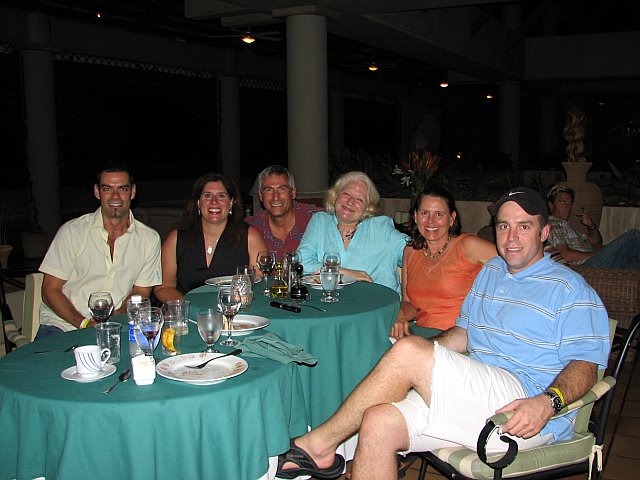
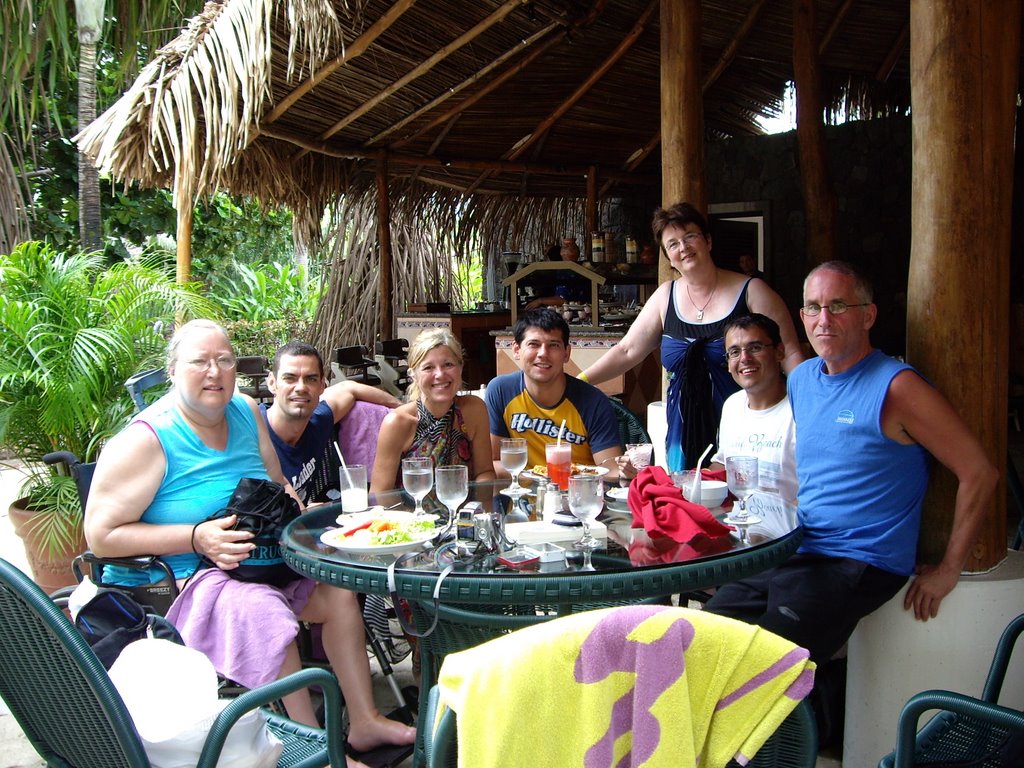
There were 34 other participants in the course which was led by Jane Grandbouche, a Wisdom course leader from Florida. Going in, I knew four of the other partici- pants and recognized a few others from the Bay Area. By the end of the week there was a very strong sense of community amongst us all. As I mentioned a couple of days ago in my blog post, what truly defined the week for me were the amazing conversations. We were in the course three and a half hours a day, and the rest of the time was our own. I spent mine almost exclusively with other people in the course, and unlike my standard pattern, I didn't hang primarily with the people I already knew nor with the same people each day. And no matter who I was with, they were the perfect people to be with. In retrospect, what stood out clearly was the fact that I'd had no "throw away" conversations during the week. Whatever we were doing--eating, laying on the beach, aerobicizing in the pool, or touring the rain forest--people brought a depth and intentionality to their dialogues that is so rare in everyday life.

This was my second vacation course, and in the first one I had paid extra to have a room to myself. I had wanted to avoid having to deal with any issues arising from having a straight roommate; interestingly enough, having more freedom and ease around being with straight men was something I wanted to get out of that course. (And I got it! :-) My roommate Shannon was a great guy, immediately eliminating any concern that I might have had.

During the week I began a friendship with John, the travel agent who had arranged the trip. Enjoying the sun together on the beach one day, he triggered a memory I had of a junior high dance and a horrible moment when I noticed that the girl who I was going to ask to dance had cringed when she saw me coming. I realized that years later after I had come out, that event was still often in the background when I went out dancing at 177 Townsend, the club space where I always felt like a king, able to approach anyone and say anything. I felt unstoppable, but there was an unrecognized subtext of completing that humiliation from years before...

WE LEARNED A DECEPTIVELY SIMPLE structural exercise in the course which we practiced in groups of five before moving on to using the technique by ourselves. The exercise consisted of processing our thoughts, feelings, and physical sensations in the moment, and in its simplicity gave us huge access to unexpected insights. One night while doing the exercise with other participants, I found myself experiencing a particular moment from childhood. It is the first memory I have of something being very wrong, and while from my current perspective it seems trivial, it was traumatic to me as a child.

I was the oldest grandchild on my mother's side of the family, and for a number of years Easter had been all about me hunting for the Easter eggs. Then my sister and cousin reached the age where they, too, could participate. Knowing that I already knew what I was doing, my mother, grandmother, and aunt all helped Molly and Julie. It was such a normal thing, but to me that morning it meant that I was no longer wanted. I pouted and cried and took myself away... and taking myself away is what I have always done since then when I face failure.

It seems like such a silly thing to be traumatized by, and my mother has asked me what she might have done differently to have prevented it. "Nothing," I always tell her. And if it hadn't been that event, it would have been something else. We all experience failure for the first time at some young age, and we all decide that it means something. Whether the event is big or small matters little; in the world of a child, the fall from grace is inevitable.

Sitting on the floor doing the structural exercise in Costa Rica last week, someone asked me what I was present to, and for a few seconds I was that little boy again. I have talked about that incident many times, but this was different: I was experiencing the emotion of that moment for the first time in 35 years. And I cried that little boy's tears.

In reflecting on the experience, I saw that that little boy no longer serves me, that I don't need to carry around that pain anymore. I got to complete that experience.

ONE OF OUR ASSIGNMENTS was to watch other people and identify what we liked about how they walked, sat, etc. And then, once we had developed a sense of what we liked, we were encouraged to steal from people. (No, not their cameras!) Jane told us that we weren't stuck with the structural sentences that we already have, and like changing our shoes for different activities, we can put on new structural language as we move through life.

Mario was the fitness trainer at the resort, and I had met him one day in the gym. We'd had a nice chat about what he liked about his job and working with people. A day later I joined him in the pool and tried water aerobics for the first time; he had pushed us hard but always kept it fun. Someone described him as being "completely comfortable in his body."

The second time I did water aerobics, I watched him carefully, and I identified some things to steal: his slightly bow-legged walk, his smile that revealed not only his upper teeth (as mine does) but also the lower ones, and his habit of humorously lifting his eyebrows (my eyebrows are primarily used to warn). After the aerobics session, I asked his age: twenty-five.

It occurred to me that I didn't need to steal any new structural move- ments or postures from a 25-year-old. In Portland earlier this year, a young friend told me that I was a kid at heart, and it really resonated. I really enjoy getting crazy and having a good time, and I have many young friends. I'm often attracted to young men; I love their energy.

What I don't own all the time is that I'm a man. That may sound strange, but so often I still feel like a kid. Even riding in the shuttle from the airport to the resort, I had the feeling of being a boy on an adventure.

Last fall I had flown down to SF from Portland for Folsom Street Fair. On Sunday morning I had been at a club dancing, and while standing in line for the restroom, I had caught a glimpse of myself in the mirror.

When I was in my early and mid-20s, I remembered seeing gay men who were MEN. Strong. Established. Powerful. And that morning I had seen myself as such a man, staring back at me in the mirror. It had surprised me.

In Costa Rica, I got really in touch with being a man, and I chose to steal from the awesome men in the course, like my friend Mark. One day in class he had stood up to his full 6'-plus height, and the powerful presence that he is filled the room. Now that is something worth stealing!

So many men in the course--Mark, my roommate Shannon, Brad, Red, Jeff, Clark, Sam--contributed greatly to me during the week. Many women did as well (and wow, were there some amazing women! Dolly, Marlene, Christina, Ellen, Eve, Roxanne, Monica, Cathy, Sandra, Della, Linda, Barbara, Elissa amongst others). But in this course it was the men that really made a difference for me.

THE LAST NIGHT OF THE COURSE we had a meal at Mar y Sol, a marvelous continental restaurant near the resort. The dinner was filled with exploration and inquiry, and afterwards a few folks and I went skinny dipping in the Pacific. It was my second night of doing so that week, and like the first the surf was filled with tiny bioluminescent creatures that glowed as we splashed about. Five of us sat in the waves and shared our experiences... freely able to just be with each other after having bonded so quickly during the week. It occurred to me later that the real bioluminescent creatures at that resort were us, the folks in Structural Connections.

I crawled into bed around 2am, and while I had to be up just four short hours later, I lay there for an hour thinking about all that had happened during the week. Out of all of the week's experiences--completing the pain of that little boy who didn't get all the Easter eggs, getting to own that I'm a man, really hearing the acknowledgment that people gave me, and enjoying so much ease in being with people--I had a brand new, deeply felt sense of who I am.

What an absolutely awesome feeling. I think it must be what the Costa Ricans mean by "pura vida."


Note: I went to the CarbonNeutral Shop and offset the CO2 emissions from my flight to and from Costa Rica. It cost me $18.

Labels:

Thursday, May 25, 2006

Waking the sleeping giant

Why do I write?

I've been asked that question recently, and I ask it of myself. And I sometimes wonder if some of my recent posts, such as those about the NSA's domestic survelliance and data mining programs, seem too negative and unaligned with Torqopia's mission:
"Copia" is Latin for "abundance," and this blog explores my belief that abundance is all around us. We live in a world of infinite possibilities, and we have choice about what shows up in our lives. I write about a wide range of topics, and common themes are individual freedom and a world that works for everyone.
In 2003 I took Wisdom Unlimited, a ten month course that explores the question, "What if the most important thing about who we are is not what's going on inside of our heads but what is coming out of our mouths?" Through ongoing homework assignments and weekly course events, participants become aware of what they are saying and how closely it is related to what other members of their immediate community--those they are speaking to on a regular basis--are saying. They look at the age of their conversations and begin to see that much of what they say they've been saying for a long time, often since childhood. This awareness gives participants opportunities to upgrade those conversations and bring all of their adult capacities to their interactions with others. As we say in the course, "If you want a new life, say new things."

This year I am assisting with Wisdom; my primary role is to work with my participants to keep the material present for them between course sessions. At the beginning of the course, each of us assisting in this role were asked who we wanted to be known as during the course. While pondering the question, I remembered sitting in a course session back in 2003, feeling totally alive and inspired by the discourse and the people sharing in it. I looked out the window and saw cars backed up into the distance on I-5 in Seattle, and it occurred to me that humanity was a sleeping giant. I was reminded of the opening scenes in The Gods Must be Crazy which shows some of the absurdities of modern civilization: people rushing from place to place, often engaged in repetitive, mind-dulling tasks, disinterested to those around them.

So when asked last month who I wanted to be known as, I answered, "I want to be known as someone waking the sleeping giant."

What does that mean? It means that I think it's important that people lift their heads up from their day to day existence and try to get some sense of the bigger picture, that they attempt to gain some understanding of what happens at a distance from them but is nevertheless intricately connected to their own existence. In America few people any more are involved with, let alone aware of, how their food is produced or where it comes from. Food... what could be more basic to our lives, and yet it has become simply a product, and one which resembles less and less what people a hundred years ago would have recognized as food.

Waking the sleeping giant also means having people seek some deeper knowledge of the world and to engage in asking What? and How? and Why? It means to think and discuss and ponder on life's mysteries, not to simply accept what one is told.

And most importantly, it means that people recognize that they have choice in their lives. And not simply between Coke or Pepsi, but real choice in who they get to be and what they get to do. And to get that in having choice, they also have responsibility for their lives.

None of this is to say that there's anything wrong with all of the day to day activities that people--including me--are engaged in. All of that stuff is our lives. What I'm saying, though, is that all of that stuff isn't enough to be fully alive as a human being.

And that is why I write. To share information. To offer another perspective. To remind people that abundance--and miracles--are all around them. To quote Wayne Dyer, "Abundance is not something we acquire. It is something we tune into."

And I also write to warn. I have been fascinated by science and technology since I was a small child. I absolutely love it. But science and technology are neutral entities; we decide how to use them. And I do have real concerns about how we're using technology.

I think it is dangerous for us to think we can outsmart nature and genetically engineer our food crops... I doubt that anyone has a true sense of the potential consequences. Our ecosystem is amazingly complex and interconnected, and we always seem to leave out one critical factor when we make our calculations.

I worry that we've built our civilization's foundation on faulty assumptions about resources and their costs, not to mention our ability to affect the world with our activities. Systems in balance don't always change linearly; they can sometimes reach a tipping point where an equilibrium is disturbed and conditions change rapidly. Even while we may be reaching the end of cheap fossil fuels, we may have already irreversibly altered the climate in ways we will regret.

And most of all I am troubled when technology is used in ways that chip away at our individual freedoms and at the very essense of democracy. Covert surveillance and drone weapons both diminish our humanity, the one taking away our ability to simply be without being observed, the other reducing our inhibitions to kill. It is all well and good to say that extreme measures must be taken to protect the country in the face of new threats, but where does it end? And what are we protecting? Is the objective simply to keep people alive? Or is it to allow people to live?

I see no simply answers to these questions. We have released many genies from many bottles, and there is only one way to go back: a complete and total collapse of civilization. So barring that, how do we move forward, protecting both our own liberties and cultivating true freedom in the world? What happens when the inevitable happens, that the technologies we have developed--nuclear weapons, genetic engineering--are used against us? Does the state clamp down even more tightly, squeezing ever more humanity from the citizenry? Does the pendulum continue to swing from conservative to liberal as we search for answers to the questions of the day? Or does technology give someone the power to arrest the swing of the pendulum at one of its extremes, locking us in to some unending, dreary, authoritarian future?

I don't have the answers, but that is not to say that they don't exist. Abundance is all around us, and so are the solutions. They are embodied in humanity, in the sleeping giant that only has to wake up in order to say something new.

And so I write.

Labels: , ,

Tuesday, May 02, 2006

This moment, and you, are unique

I've been back in SF for just over six weeks now, and the thing that I am enjoying most about living here is something that I didn't experience much of when I lived here before: simply being easygoing and playful with strangers and casual acquaintances. Portland is a very friendly town, and some of that rubbed off on me. But I'm also choosing to open myself up. I did a course in Maui in 2003, and one of the intentions of the course was to give us a new way of relating to people. In the course I saw that one of the things I do in my life is to always act like I'm in a hurry, like there's somewhere else I need to be. What it really is is a way to avoid being uncomfortable... to avoid being present... to avoid being with people.

For much of my life I was often irritated by my dad's willingness to talk to anyone: shopkeepers, waiters, etc. While I would focus on the transaction at hand, Dad actually engaged people in conversation.

In my world, time spent with my friends and family was what was important. And hey, I had enough friends, why do I need more? If I didn't know you, I probably breezed right past you. I often forgot people's names despite multiple introductions, and once at a party in Laguna, someone really gave it to me, asking me "what my @#$&! problem was" about not remembering his name. And I found that I had no reply: I simply stood there and listened because he was right.

What I'm seeing now is that I've had it all wrong. Or maybe not wrong but rather that there is another way that I could relate to those around me. I've had it like wherever I was going was the place to be, and that the people I knew already were the ones who were important. I've acted like all of the other interactions in my life were somehow disposable. Being back in SF, I'm seeing that all of those interactions are my life. Telling the woman on the street that her long black coat floating on the wind is beautiful is just as important as any other conversation. Every moment is unique and will never come again. Treating any of them as throwaways amounts to throwing away a bit of my one precious life.

And that reminds me of a quote my wise and talented friend Veronica shared at her recent cabaret show, Family Jewels:

Martha Graham to Agnes DeMille: There is a vitality, a life force, a quickening that is translated through you into action, and because there is only one of you in all time, this expression is unique. If you block it, it will never exist through any other medium.... It will be lost.... The world will never have it. It is not your business to determine how good it is, nor how it compares to other expressions. It is your business to keep it yours clearly and directly, to keep the channel open. You do not even have to believe in yourself or your work. You have to keep open and aware directly to the urges that motivate you. Keep the channel open. No artist is pleased. There is no satisfaction whatever at any time. There is only a queer divine dissatisfaction, a blessed unrest that keeps us marching and makes us more alive than the others.

Today's place-o-the-day to check out: Cafe Gratitude. They have one Berkeley and two SF locations.

Namaste!

Labels: ,

Monday, May 01, 2006

You are what you eat

Food is something I've cared a lot about for awhile now. That may sound strange... and I'm not saying what you think I might be saying.

In 2001 I read articles in Sierra Magazine and Scientific American (4/01) about the genetic modification of food crops and animals, and I began to grow wary of this application of technology to agriculture. And as I read more, I became even more wary of our increasing tendency to treat agriculture as an industry.

I was born in Kansas and grew up in Burrton, a small town of 800 people, surrounded by farmland (and oil fields) stretching to the distant horizon in all directions. My father's father was a farmer--and for awhile Burrton's mayor--and I have very early memories of watching my grandmother, mother, and aunts prepare lunch and gallons of iced tea for the men in the fields during wheat harvest, a time of year when most of my dad's family returned home to help out on the farm. At noon we would drive out to the country to deliver the food, and I'd be treated to a few turns around the field on the combine. There were trips in ancient trucks carrying loads of wheat back to Burrton's elevator, and the occasional opportunity to play for a couple of hours in a day's final load of grain, with the wheat truck parked on a carport back at home because my farming family had worked past dusk and the elevator had closed for the night.

When older, I spent some of my summer days on the farm, attempting vainly to match my father's straight furrows. (Laughing to myself now: as it turns out, I was gay to the core. :-) And years later while at Stanford, Dad called one day to tell me that he was no longer going to be farming, choosing instead to lease out the land. Farming had become, at best, a breakeven endeavour for my family. There was a momentary tug at my heart, and I thought to offer to return home and help him on the farm, but I remained silent.

So I have some connection with the land and the small farm way of life, more so than most Americans certainly, though far less than a few. And the intermingling of genetic science and our food supply, not to mention what I saw happening to the small scale agrarian lifestyle that I had grown up with, gave me much to be concerned about.

I was happy to see, therefore, an initiative on the 2002 Oregon ballot to require the labeling of any genetically modified foods sold within the state, and I volunteered to help with the campaign, only to see the measure defeated after a wave of advertising by the big agricultural commodity companies.

I subscribed to the True Food Now newsletter and learned a bit about the Slow Food Movement. I began to buy organic produce and milk, becoming gradually aware of how little food there is left in a supermarket these days. (My cousin Kim says "only around the edges.")

And then a year in to the Iraq war, I picked up the February 2004 issue of Harper's Magazine, read Richard Manning's "The Oil We Eat: Following the Food Chain Back to Iraq" and had one of those transformative reading experiences that radically shifts one's perspective on the world. Our food supply was now dependent on fossil fuels, and not simply as fuel for the production and transportation of food, but for the very nitrogen fertilizer required to grow the same crops in the same fields year after year. The article was fascinating, and I bought Manning's book Against the Grain: How Agriculture Has Hijacked Civilization which examined humanity's relationship with agriculture. Interestingly, in Manning's view, it wasn't simply modern industrial farming that was the problem: agriculture from its beginning had begun to deprive us of our basic humanity--the experience of being fully alive and alert in the act of hunting for our sustenance. There were so many fascinating ideas in the book: that agriculture was an emergent system that developed spontaneously from the interplay of early humans and grasses rather than something our ancestors "invented," that our food supply was now more a business of producing and processing commodities than simply growing food, that agriculture was responsible for more of the world's famines than any other factor, and that the Green Revolution simultaneously reduced hunger but increased the number of people living in poverty. Against the Grain is a great read, and I highly recommend it.

The notion that our food supply was dependent on the world's reserves of petroleum and natural gas became even more of a concern as I read about the coming peak in worldwide oil production. We've decoupled ourselves from our current annual allotment of sunshine, instead growing inconceivablely large amounts of corn and other grains which are largely fed to livestock which we then eat. The only hitch, of course, is that the only way to grow this much grain is to apply artificial fertilizers which are derived from a rapidly diminishing resource. We're borrowing against millions of years of sunlight stored away as fossil fuels, and a day will inevitably come when we exhaust those resources. How then will we feed ourselves? (I watched Soylent Green yesterday. It made no sense, of course: eating humans is as inefficient as growing corn to feed to cattle to feed ourselves... but the point is clear.)

I'm gratified that my concern is shared by more and more people. In early April I read a review of Michael Pollan's new book, The Omnivore's Dilemma: A Natural History of Four Meals, in the SF Chronicle Book Review. Pollan follows four meals back to their sources: a fast food meal, an organically grown meal made of ingredients purchased at an organic supermarket chain, a meal with ingredients purchased directly from the farmer, and a meal made only of what he personally hunted or grew himself. I was amazed to learn how little difference there was in the mode of production of conventionally-grown and organic foods purchased from a typical supermarket. Most shocking of all: a chicken labeled as "free range" needs only to have had access to the outdoors, but in practice this access may exist only for a two week window during a short, seven week lifespan. The chicken might never have even stepped outside of the 20,000 chicken facility it was living in, so accustomed to finding its food and water indoors and not out. And this: raising cattle on corn raises the acidity of their digestive system, making it a cozy environment for E. coli and other germs that normally affect humans but not cattle, requiring that the cattle be fed more antibiotics and further raising the chances of antibiotic-resistant foodborne pathogens.

The best part of the book for me was the section about Polyface Farm, a family-run and nearly self-sufficient small scale farm which produces an amazing bounty of food by operating as a "grass farm." The grass feeds cattle and chickens, which in turn fertilize the grass with their manure and support a complete and self-contained ecosystem on the farm, needing only some chicken feed as an input. This style of farming requires thought and careful planning and is far more labor intensive than large scale monoculture farming, but it actually produces more food per acre than the latter. I found myself again with that tug at the heart: call Dad and start a farm on the model of Polyface! (I settled for sending him The Ominivore's Dilemma for his birthday.)

I've talked about this book with a number of people: Dad, friends, even the woman working at the Rolo store on Market Street in San Francisco. Everyone seems interested... a sign that perhaps there is still hope. :-)

Why did I write this tonight? My latest read was Nathanael Johnson's "Swine of the Times: The Making of the Modern Pig" in the May 2006 Harper's. It picked up the theme of industrial livestock production as it pertains to pigs. I found myself--finally--thinking that becoming a vegetarian might not be such a bad idea after all. And if not that, I will at least be more aware and start to ask the tough questions when I buy meat and produce: where did this come from? How was it raised? What is the impact of this purchase? How can I raise awareness in my communities?

And so I write.

Food... it is a strange thing. I have often wondered at the oddity of sitting down at a restaurant and being fed. Implicit in the transaction is trust that we'll be given something wholesome to eat, that we won't be poisoned. But something else has entered into this daily ritual, something present as well in a trip to the supermarket: a vast opaque screen between us as eaters and where what we eat comes from. The food industry is changing rapidly; the large scale industrial production of swine began only in the 90s. Monsanto and other companies are tinkering with the genes of plants and patenting those changes, leaving farmers dependent on them for their seed supplies. And scientists are beginning to learn that crops grown with pesticides not only have more of the "bad" but also less of the "good stuff." Likewise with salmon raised on farms rather than caught in the wild, the former not only providing less of the heart healthy fats but needing to be artificially colored to make up for what they're fed in place of their natural diet. We're planting entire regions with single crops and raising thousands of genetically identical--and disease-prone--livestock under one roof. We're setting ourselves up for a modern Irish potato famine... and eating less healthy food in the process.

"You are what you eat," the old saying goes. What are we?

Labels: , , , , , ,

Wednesday, April 26, 2006

And to give you a taste of how I think and write, here's something I wrote shortly after 9/11, "Thoughts on the World."

Labels: ,